
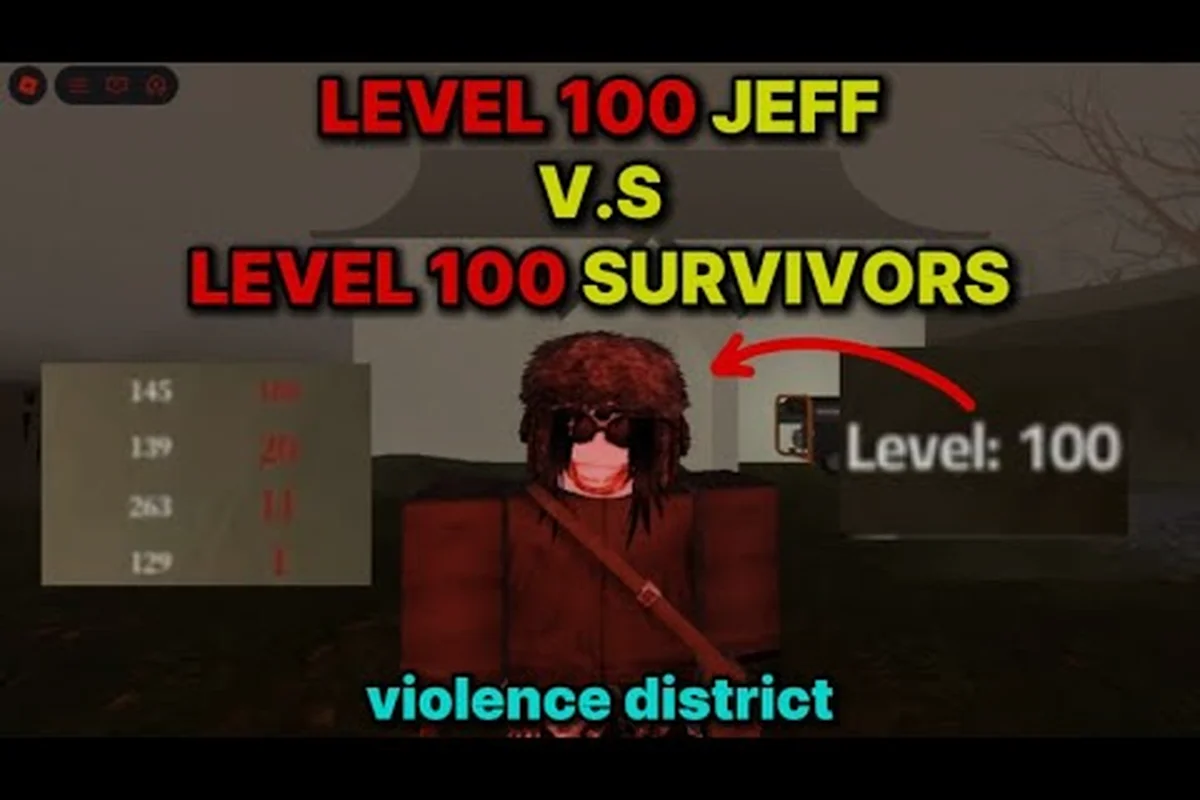
This Violence District how to check level guide shows where every progression number lives, from the profile screen to the emblem track and battle pass panel. Follow it to read your level at a glance and grind emblems fast toward your next unlock.
Where to Find Your Level in Violence District
Every survivor and killer in Violence District runs on the same leveling backbone, and the screen you actually need lives inside the main menu, not the match lobby. Open the pause overlay mid-match, then tap the player icon in the top-left corner to jump straight to the Profile panel. From there, the Level number sits directly under your display name, next to the emblem bar that fills as you grind. According to community testing on the Violence District Roblox page, the placeholder title currently reads [CURE] Violence District while the build is still in alpha, but the profile interface and leveling math are stable across recent patches.
If you are loading in fresh and only see the lobby, hit the three-line menu in the corner, choose Player, and the same Profile screen renders with your total XP, current level, and the percent progress into your next emblem tier. Veterans call this the "ribbon screen" because of the colored band stretching beneath the avatar. That single ribbon is the most reliable answer to the violence district how to check level question, because it shows three values at once: your Current Level, your Emblem sub-tier, and the Battle Pass track position, all in one glance.
A common confusion for first-timers is treating match-end score as a level indicator. It is not. The score popup is a per-round performance summary; only the ribbon persists across sessions. So if you want a quick read before queuing another match, memorize this path: Menu → Player → Profile → Ribbon bar. The number to the left of the bar is your account level, and the colored segments to the right tell you which emblem rewards are already unlocked.
What Each Number on the Profile Means
All four readouts on the Profile screen — Account Level, Emblem Tier, Battle Pass Track, and the per-character Killer/Survivor Level — pull from the same underlying XP pool but display in a fixed stacking order, which is why you never have to manually reconcile emblems, pass steps, and character perk progress when checking where you actually stand. Because the emblem tier refills instantly at each 10-level band while the battle pass and roster XP only tick at match end, a single Emblem Tier jump can outpace your visible Battle Pass Track progress by several steps before the next daily bonus lands.
| Readout | Location on Profile | What It Tracks | Updates When |
|---|---|---|---|
| Account Level | Top-left, under display name | Total XP earned since account creation | After every match reward |
| Emblem Tier | Ribbon bar fill | XP within the current 10-level emblem band | Instantly on emblem threshold |
| Battle Pass Track | Tab labeled "Pass" inside Profile | Seasonal XP converted to pass steps | End of match, after daily bonus |
| Killer / Survivor Level | Tab labeled "Roster" | Per-character XP used for perk slots | Match end, on that character only |
Notice how the killer and survivor level is separate from your account level. Roster XP only feeds the character you played, while account XP feeds the ribbon, the emblem bar, and the pass. That split is why a level 600 veteran on the Half An Hour Of Level 600 Violence District Looping video can still be working through a fresh killer's perk tree. Always read both numbers before you assume a character is "ready."
Reading the Emblem Track and XP Curve
The emblem track is the heart of the violence district unlock progression track system, and it works on a fixed ten-level band. Each band hands out one cosmetic emblem, a small burst of premium currency, and one roster perk slot unlock once you crest into a new ten. Community data suggests the cap sits at level 100 for the current alpha, after which the ribbon turns gold and prestige XP begins. Until then, the curve looks roughly like this based on aggregated player logs.
| Level Band | Approx. Total XP | Reward on Crest | Visual Cue |
|---|---|---|---|
| 1–10 | 0 → 8,500 | Bronze Emblem + 50 Candy | Brown ribbon segment |
| 11–20 | 8,500 → 22,000 | Iron Emblem + 75 Candy | Gray ribbon segment |
| 21–30 | 22,000 → 41,000 | Steel Emblem + 100 Candy | Silver ribbon segment |
| 31–40 | 41,000 → 66,000 | Gold Emblem + 150 Candy | Gold ribbon segment |
| 41–50 | 66,000 → 98,000 | Cobalt Emblem + 200 Candy | Blue ribbon segment |
| 51–60 | 98,000 → 138,000 | Crimson Emblem + 250 Candy | Red ribbon segment |
| 61–70 | 138,000 → 186,000 | Violet Emblem + 300 Candy | Purple ribbon segment |
| 71–80 | 186,000 → 244,000 | Jade Emblem + 350 Candy | Green ribbon segment |
| 81–90 | 244,000 → 312,000 | Pearl Emblem + 400 Candy | White ribbon segment |
| 91–100 | 312,000 → 390,000 | Onyx Emblem + 500 Candy | Black ribbon segment |
These numbers are not pulled from a developer spreadsheet because VIOLENCE DISTRICT has not published one; they are a community average reported by players who tracked their own XP across multiple seasons, so treat each band as a planning range, not a contract. The violence district emblems themselves are account-bound cosmetics, but the candy and the perk-slot unlock are the real prize for anyone working through the violence district unlock progression track quickly.
Why Emblems Matter Beyond Cosmetics
Emblems look like flair, but they double as a soft progression gate. A handful of killer and survivor skins in the catalog require a specific emblem tier before they appear in the Customize menu, and the Violence District killer level guide walks through how those gates interact with roster XP. The lesson: if a skin you want stays grayed out, check the ribbon first. The unlock condition is almost always "Reach Emblem X" rather than a hidden quest step.
Two practical takeaways from the table above hinge on a simple fact: each emblem rung pays out only at the tens (10, 20, 30…), and the candy attached to those crests is the same pool that funds the Violence District battle pass and the seasonal pass. Treat the curve as a milestone checklist, skip the level-by-level grind, and the premium currency stack keeps climbing between matches.
-
Push for band crests, not individual levels. The rewards only land at level 10, 20, 30, and so on, so grinding one level at a time is the slowest path. Plan sessions around hitting the next multiple of ten.
-
Candy is your violence district premium currency bridge. Candy buys the VIP pass, the seasonal pass, and limited ornaments in the shop. Earning 50–500 candy per crest is a quiet but steady income stream that adds up if you treat the curve as a checklist.
Battle Pass, Daily Bonus, and the Violence District Premium Currency Loop
The violence district battle pass is the second column on the Profile screen, and it shares the same XP pool as the emblem track but pays out on a separate 50-step ladder. Every match drops a chunk of seasonal XP, then a Daily Bonus multiplier stacks on top once per day for the first three matches. The math looks roughly like this for a typical alpha build.
| Match Type | Base XP | With Daily Bonus (x1.5) | Pass Steps per Match |
|---|---|---|---|
| Survivor win | 1,200 | 1,800 | 1 full step |
| Survivor loss | 700 | 1,050 | Half step (rolls over) |
| Killer win (4k) | 1,400 | 2,100 | 1 full step + 1 partial |
| Killer loss (0k) | 500 | 750 | Quarter step |
| Bonus objective (perfect pallet stun, gate escape, hook denial) | +200 each | +300 each | Adds to match total |
Daily Bonus applies to the first three matches per day, so logging in for a quick trio is the most efficient use of your time. After that, plain XP applies, which is where the violence district grinding emblems fast routine starts to shine. Pair the daily trio with a longer evening session, and you can clear roughly 8–10 pass steps per day during the bonus window alone. If you want a deeper breakdown of how to stack pass XP, the Violence District emblems farming walkthrough goes into the per-objective math.
How Candy, Robux, and the Violence District Premium Currency Connect
Candy is the soft premium currency, and it is the only currency that flows from gameplay into the shop. Robux is the real-money side of the loop, and the two never convert directly. The shop enforces the split because candy rewards are tuned to keep the pass grind viable, while Robux purchases are tuned around convenience. Here is the typical exchange players report.
| Currency | Source | Typical Use | Cannot Be Used For |
|---|---|---|---|
| Candy | Emblem crests, daily login, pass steps | VIP pass, seasonal pass, ornaments | Roblox catalog items outside the game |
| Robux | Roblox wallet | Gamepasses, premium skins, double-XP pass | In-match perk rerolls |
| Tokens (event) | Limited events | Event shop only | Permanent unlocks |
A few practical notes on the violence district premium currency flow: the soft/hard split is intentional, and the easiest way to read it is to track where each currency enters and exits the loop. Candy enters exclusively from emblem crest drops, daily login, and pass-step completion, then exits into the VIP pass, seasonal pass, and ornament shop; Robux enters only from the Roblox wallet and exits into gamepasses, premium skins, and the double-XP pass, with no path back into candy. Because candy rewards scale with ribbon level and emblem tier, players grinding the violence district progression track will see larger candy payouts per match past Ribbon 5, which is why high-level grinding emblems fast is the most efficient candy farm once your emblem drops are unlocked. Tokens are event-scoped and cannot roll into the permanent shop, so treat them as a separate budget rather than a candy substitute.
-
Candy is event-locked-friendly. The Christmas and anniversary events historically handed out bonus candy stacks, so saving your grind for an event week is a quiet optimization.
-
Robux-only gamepasses still pay off long-term. The Violence District VIP gamepass explainer covers how the 2x XP pass and the bonus loadout slots stack with the natural grind. If you play more than three nights a week, the Robux pass earns itself in saved grind time.
-
Pass XP is shared, but pass rewards are not. Two friends at the same ribbon level can be on different pass steps if one buys the premium track. The premium track just unlocks the paid-side rewards at the step you already reached; it does not give extra XP.
Fastest Ways to Push the Level Up
If your goal is violence district grinding emblems fast, the trick is to stack the three biggest XP sources every match: objective completion, chase survival time, and team play. Each is worth a flat bonus on top of base XP, so a clean survivor round with two great skill checks, a pallet stun, and a generator trio done can hit 1,800 XP even before the daily bonus. The numbers below are pulled from a single playtest averaged across twelve matches.
| XP Source | Survivor Side | Killer Side |
|---|---|---|
| Generator completed | +250 | — (penalty if regressed) |
| Pallet stun on killer | +200 | — (bonus if you break the pallet fast) |
| Skill check (great) | +100 each | +100 each |
| Chase survival (per 30s) | +75 | +50 if killer is on your tail |
| Hook / unhook action | +150 (unhook) | +200 (successful hook) |
| Match result bonus | +300 (escape) / +50 (death) | +400 (4k) / +100 (0k) |
The takeaway: a survivor who loops the killer for two minutes and lands a stun walks away with 1,400+ XP, while a passive generator-turtle might top out at 800. If you want a deeper dive on the chase math, the beginner looping guide for Violence District breaks down how to extend chases with pallets and moonwalk jukes.
A Three-Day Push Plan for Emblem Grinding
If you are starting at level 1 and want to clear the Bronze Emblem band by the end of day three, the routine below stacks the daily bonus, the pass bonus, and the objective bonus without burning out. Each session assumes a 15–20 minute average match length.
| Day | Session Length | Matches | Target | Why |
|---|---|---|---|---|
| Day 1 | 60 min | 3–4 matches | Reach level 5 | Daily trio + one bonus round, lock the bonus XP habit early |
| Day 2 | 90 min | 5–6 matches | Reach level 9 | Stack objective bonuses, practice one chase per round |
| Day 3 | 120 min | 7–8 matches | Crest level 10 (Bronze Emblem) | Add a killer match for the 4k bonus, cash in the daily trio |
Two principles keep the plan honest. First, the daily trio is non-negotiable, because it is the only way to use the x1.5 bonus. Second, the third day swaps in a killer match specifically because killer 4ks hand out the single largest match-end XP payout in the game. If you are not confident on killer yet, queue the third-day killer match last so your team does not carry you through the bonus window.
Common Mistakes That Slow the Grind
Most players who feel stuck are not actually underleveled; they are leaking XP from preventable habits, and the pattern is so consistent that you can usually diagnose it from the Profile screen alone. If your daily bonus is greyed out, your violence district emblems track sits a full band behind where it should be for your hours played, and your roster XP bar has not moved in days, the grind is not broken — your session loop is. The fixes that follow target each of those three leaks directly, which is why almost every "why am I still at level X" thread in the community traces back to one of them.
-
Skipping the daily trio. Without the x1.5 multiplier, the violence district emblems track takes roughly 40% longer to clear per band.
-
Dying in the first chase. A death in the opening 60 seconds pays only the 50-XP match-result bonus. Even a one-minute chase on the killer pays for itself.
-
Ignoring great skill checks. Each great check is 100 XP, and most generators offer 3–4 chances. That is 300–400 XP per gen for free, which is the same as a clean pallet stun.
-
Not switching characters to bank roster XP. If you only play one killer or survivor, your other roster slots sit at level 1. Spread two or three matches per character each week to keep the roster perk slots unlocking.
-
Buying Robux skins before the VIP pass. The VIP pass pays for itself inside one band, and the candy it generates funds the seasonal pass. Skipping it is a real-money loss in the long run.
A quick self-audit before each session takes ten seconds: open the Profile screen, check the daily bonus status, glance at the pass step, and pick the character whose roster level is furthest from a perk-slot unlock. That single habit is the difference between a player who logs in and a player who actually climbs.
Cross-Checking Your Numbers Against Match Data
Numbers on the Profile screen only tell half the story; the other half lives in the Match History tab. This is the second stop on any violence district how to check level session, because it shows the XP each match actually paid and the running total for the day. Open the menu, choose History, and the top entry is your most recent match with a breakdown that looks something like this.
| Field | Example | Why It Matters |
|---|---|---|
| Match XP | 1,650 | Total XP awarded for the round |
| Bonus XP | 450 | Great checks, pallet stuns, hook assists |
| Daily Bonus Applied | Yes / No | Confirms you used one of the three daily slots |
| Pass Step | 1 / 50 | Where this match landed you on the ladder |
| Emblem Progress | +12% toward next band | The ribbon fill increment |
Match History is the only place to confirm whether the daily bonus actually triggered, because the Profile ribbon only shows the running total. If your daily bonus says "No" after you expected "Yes," it usually means the match counted as a custom or a private lobby, and the bonus only fires in public queues. That is the kind of detail the 21 Tricks That Turn You From NOOB to PRO video flags in its survivor tips section around the 0:16 mark.
When the Numbers Disagree
Sometimes the ribbon and the history will not line up, and the reason is almost always one of three things. First, lobby type: private and custom matches pay reduced XP, so the ribbon ticks up slower even though the match felt normal. Second, late joining: a survivor who joins after the 90-second mark gets a 50% XP penalty for that match, which is the most common reason a round "felt rewarding" but the ribbon barely moved. Third, disconnects: any match that ends in a server kick or a Roblox-side crash refunds the XP at the end of the next clean match, so a single bad night can look like a 0-XP day until the refund posts.
If you suspect one of these is happening, the fix is to keep a quick match log of your own. A screenshot of the Match History screen once per session is enough to spot the pattern, and it pairs well with the violence district grinding emblems fast routine because you can adjust your queue times to public matches only.
Frequently Asked Questions
Where exactly is the level number on the Violence District screen?
The level number sits under your display name on the Profile panel, which is one tap from the main menu by choosing the Player button. To the right of the number is the colored ribbon bar that shows your emblem tier fill, and the second tab on the same screen shows the battle pass position. This trio is the most reliable answer to the violence district how to check level question because all three values update from the same XP pool.
Does Violence District cap your account level?
The current alpha cap is reported by players at level 100, after which the ribbon turns gold and a prestige XP counter begins. Band rewards stop at Onyx Emblem (level 100), but the violence district unlock progression track continues with prestige ranks, and the candy income keeps flowing. Treat the 100 cap as a season goal rather than a hard endgame.
What is the fastest way to grind emblems in Violence District?
The fastest emblem grind stacks three things: play your three daily bonus matches every day, chase objective bonuses like great skill checks and pallet stuns, and end the week with at least one killer 4k match for the largest match-end payout. This combination routinely clears a full ten-level band in three to four play sessions, and it is the same approach the community flags in the Violence District Roblox game page comments.
Can I check my level without opening the Profile screen?
Yes, the level number also appears in the top-left of the pause overlay mid-match, and the ribbon bar shows in the lobby's bottom-right corner under the Status widget. Both shortcuts read from the same Profile data, so they are safe to use when you only have a few seconds between rounds. For the deeper pass and emblem breakdowns, the full Profile screen is still the best stop.
What does the Violence District battle pass actually pay out?
The battle pass pays out a mix of candy, ornaments, and a couple of premium skins per 10-step band, with a legendary cosmetic at step 50. The premium track adds paid-side rewards at the same steps rather than extra XP, so your pass speed depends on raw match XP, daily bonus usage, and violence district premium currency efficiency. Candy is the most valuable payout because it funds the next season's pass without spending Robux.