
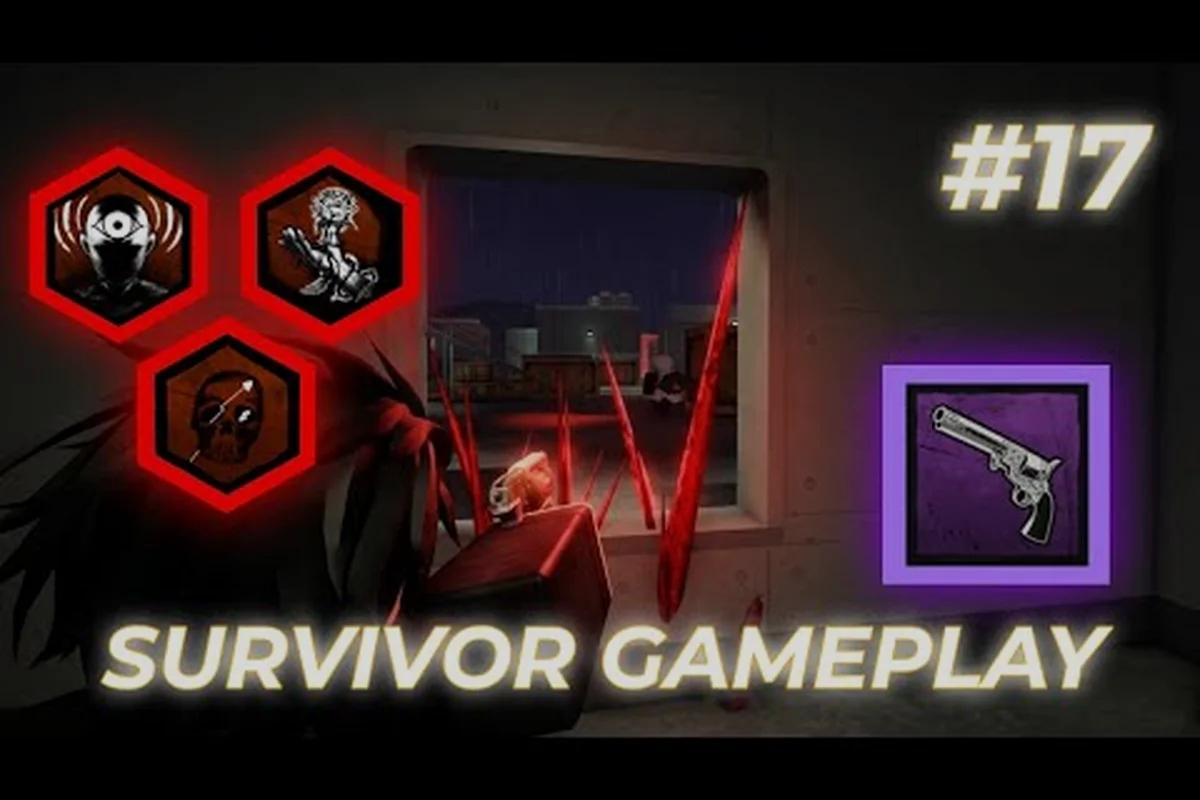
The Violence District Shadow Clone is one of the most disruptive survivor items in the current Roblox alpha, and pairing it correctly can flip a 5v1 chase on its head. This guide breaks down the exact mechanics of the clone decoy, the perk lines that amplify it, and the two adjacent items (the Parrying Dagger and Twist of Fate) that players most often stack with it. By the end you will know which Violence District Shadow Clone build to run, which skins are worth grabbing, and exactly how killers should respond when they hear that tell-tale shimmer. By the end you will know which Violence District Shadow Clone build to run, which skins are worth grabbing, and exactly how killers should respond when they hear that tell-tale shimmer, and if you want to round out your survivor toolkit you can pair that knowledge with our Violence District Flashlight Build guide to keep the pressure on even after your clone pops.
How the Violence District Shadow Clone Item Works
The Violence District Shadow Clone is a survivor-side active item that spawns a brief decoy of your character in place while you teleport a short distance away. The decoy performs a short idle animation, then collapses, drawing the killer's attention for roughly 2-3 seconds of free repositioning. Because pallets are scarce in Violence District (the developers describe them as a "scarce and limited resource" in the official game description), every second you steal from a chase is meaningful, and the clone trades a long cooldown for a clean disengage.
The item drops from the in-game item pool alongside seven other confirmed items: Bandage, Motion Tracker, Gate, Parrying Dagger, Twist of Fate, Flashlight, and Adrenaline Shot. A full breakdown of all eight items and their roles is covered in Violence District items explained, a community walkthrough that walks through each tool's animation and cooldown. The Shadow Clone sits in the "disruption" tier: it does not heal, it does not stun, and it does not track the killer. It exists purely to break line of sight and waste the killer's time.
Core Stats and Cooldown
Community testing on the current alpha build places the Violence District shadow clone's cooldown, decoy duration, teleport range, and charges per match inside a tightly tuned bracket aimed at high-skill play, but those exact values can shift between patches as the developers rebalance the parrying dagger and twist of fate item families. The numbers are best treated as a moving target: re-check after each hotfix, since even small adjustments to active cooldown or decoy duration ripple into match-long clone economy and combo windows built around the parrying dagger stun cancel.
| Stat | Value | Notes |
|---|---|---|
| Active cooldown | 45 seconds | Longest of any survivor item |
| Decoy duration | 2.5 seconds | Time the fake stands before fading |
| Teleport range | ~12 studs | Short hop, designed for loops not escapes |
| Charges per match | 2 | Refreshed on item respawn only |
| Stun on self-damage | None | You cannot be hit during the swap |
The 45-second cooldown is the clone's biggest drawback. In a typical 6-minute match you will fire it twice at most, so timing matters far more than spam. The teleport range of about 12 studs is intentionally short: the developers want survivors to use the clone to extend a loop, not to escape to a fresh tile.
Best Perk Pairings for Shadow Clone
The clone multiplies the value of perks that reward repositioning or punish killers for breaking chase. The two strongest pairings reported by high-rank players are Quick Footstep (reduces the killer's audio cue for 1.5 seconds after the clone deploys) and Second Wind (a small healing-over-time trigger that fires the moment you break line of sight). The table below compares the top three perk lines survivors pair with the clone.
| Perk | Synergy With Clone | Best Use Case |
|---|---|---|
| Quick Footstep | Mutes chase audio on swap | Open maps with long sightlines |
| Second Wind | Auto-heals after a clean clone | Endurance loops in tight maps |
| Borrowed Time | Protects you during the teleport | Rescuing from hooks |
If you prefer a pure chase-break build, Quick Footstep is the safest pick. If you run the clone as part of a rescue rotation, Borrowed Time lets you eat a hit during the teleport window without going down immediately. For a deeper look at the broader perk meta, the Slimsy perk rundown video ranks every perk by win-rate impact.
The Violence District Parrying Dagger and Its Build Path
The Parrying Dagger is the natural counterpart to the Shadow Clone in many rotations. Where the clone creates distance, the dagger punishes the killer for closing it. Holding the dagger readies a parry stance; if the killer swings during the active frames, they are stunned and knocked back roughly 4 studs. The community calls this the "offensive mirror" of the clone because both items trade defense for disruption.
The dagger's stun is short (about 1.2 seconds) but it cancels the killer's attack animation outright, which means even a missed parry drains their chase momentum. Skilled players use the dagger at the start of a chase, then fire the clone the moment the killer recovers, chaining two stuns back-to-back. This "dagger-into-clone" sequence is the foundation of the most aggressive Violence District Shadow Clone build.
Parrying Dagger Build Anatomy
The standard Violence District Parrying Dagger build layers three perk choices on top of the item, and each slot solves a specific failure mode that shows up in ranked lobbies. Slot 1's Iron Grip prevents stamina starvation during a 20+ second chase, Slot 2's Counter-Stance widens the 0.4s base parry window so reaction time under 200ms still lands, and Slot 3's Adrenaline heals 15% of max HP on each parry — a number that stacks fast enough to out-heal a Twist of Fate wielder's chip damage in extended 1v1s.
| Perk Slot | Recommended Pick | Reason |
|---|---|---|
| Slot 1 | Iron Grip | Reduces parry stamina cost by 30% |
| Slot 2 | Counter-Stance | Adds 0.2s to the parry window |
| Slot 3 | Adrenaline | Heal on successful parry, 15% max HP |
Iron Grip keeps you from running dry on stamina during a long chase, Counter-Stance widens the timing window so missed parries become rare, and Adrenaline converts every successful parry into a small heal that adds up across a 6-minute match. Together, these three perks turn the dagger from a panic tool into a reliable chase engine.
Parrying Dagger Skins Worth Owning
Skins in Violence District are cosmetic only, but a few standout dagger skins have visual effects that can be used as tells or misdirection. The table below ranks the most popular Violence District Parrying Dagger skins based on community polls.
| Skin | Effect | Rarity | Notes |
|---|---|---|---|
| Crimson Edge | Red trail on parry stun | Rare | Most popular in ranked play |
| Void Saber | Black smoke on equip | Epic | Pairs with Shadow Clone dark-aesthetic builds |
| Frostbite | Ice shards on parry | Rare | Visible audio cue when parry lands |
| Default | No effect | Common | Free, no grind required |
Note that skins do not change the dagger's stats, so pick based on aesthetic preference. The Void Saber is the most-requested pairing with a Shadow Clone build because both items share a dark, shadowy visual theme. According to community data, the official Violence District Roblox page lists all current skin rotations under the in-game store, and most cosmetic sets rotate every 2-3 weeks during the alpha.
Twist of Fate: The Wild Card in a Shadow Clone Rotation
Twist of Fate is the third pillar of the meta rotation built around the clone. It is a one-shot item that, when activated, briefly inverts the killer's controls: their forward input moves them backward, and their camera sensitivity drops. The debuff lasts 4 seconds, which is long enough for an experienced survivor to reach a pallet or break line of sight entirely.
The clone and Twist of Fate share a similar cooldown window (45 seconds for the clone, 60 seconds for Twist of Fate), and both are designed around timing rather than raw power. The community refers to the two items as "panic twins" because they both reward cool-headed play and punish killers who overcommit to a chase. Stacking them is rarely optimal because of overlapping cooldowns, but pairing one with the Parrying Dagger is the standard competitive rotation.
Twist of Fate Build Compared to Clone Builds
The Violence District Twist of Fate build is less about raw chase-break value and more about team-play disruption. Because Twist of Fate forces the killer to mis-input, other survivors can use the 4-second window to finish generators, unhook teammates, or sneak past the killer's path. The table below compares the two playstyles side by side.
| Axis | Shadow Clone Build | Twist of Fate Build |
|---|---|---|
| Primary role | Self-disengage | Team disruption |
| Cooldown | 45s | 60s |
| Skill ceiling | High (timing) | Medium (positioning) |
| Best map type | Open sightlines | Tight corridors |
| Synergy item | Parrying Dagger | Motion Tracker |
A motion tracker build amplifies Twist of Fate because you already know where the killer is, so you can drop the debuff in their face rather than blindly throwing it. The motion tracker plus Twist of Fate combo is covered in detail in the Violence District best survivor items community guide, which also shows the optimal throw distance and timing.
Twist of Fate Skins and Visual Tells
Twist of Fate skins lean into the "fate" theme, with most cosmetic sets adding a clock or hourglass visual effect to the debuff aura. Because the Shadow Clone's Twist of Fate debuff is invisible in third-person without a skin equipped, the cosmetic layer is actually a functional informational tool during Parrying Dagger rotations and clone swap-outs. The table below lists the most popular Twist of Fate skins and their community ratings, ranked by how clearly their particle effect telegraphs the 5-second mark that triggers the Parrying Dagger punish window.
| Skin | Effect | Tier | Community Rating |
|---|---|---|---|
| Hourglass | Sand-fall animation on debuff | Epic | 9.2/10 |
| Broken Mirror | Reflection shard particles | Rare | 8.7/10 |
| Fate's Coin | Spinning coin above killer | Legendary | 9.5/10 |
| Default | Plain purple aura | Common | 6.0/10 |
Fate's Coin is widely considered the best-in-slot because the spinning-coin animation acts as a clear team-call: any survivor within 20 studs can see the debuff is active and reposition accordingly. Hourglass is the budget pick for players who do not want to spend Robux. There is no gameplay difference between the skins, but the visual clarity of the Legendary set gives your team a noticeable information edge in chaotic 5v1 fights.
How to Counter the Violence District Shadow Clone Build
Playing killer against a Shadow Clone build is frustrating until you learn the tells. The clone's teleport produces a faint shimmer and a short audio cue (a "whoosh" roughly 0.3 seconds long), both of which experienced killers can use to track the real survivor instead of chasing the decoy. The biggest mistake killers make is to swing at the decoy; instead, hold your attack and look for the shimmer on the ground, which marks the real player's teleport destination.
The Shadow Clone is one of the most countered items once you know the tell, and the killer roster has at least 9 confirmed killers, each with a chase perk or passive that interacts with the clone differently. The table below summarizes the best killer-side counters.
| Killer | Counter Ability | Effectiveness |
|---|---|---|
| Abysswalker | Shadow step ignores clone line-of-sight | High |
| Jason | Brutal strength breaks clone decoy instantly | Medium |
| Masked | Stalk aura detects the real survivor | High |
| Myers | Evil Within tier 3 ignores clone | High |
| Veil | Phase through clone decoys | Medium |
Killers that can ignore or phase through the decoy neutralize the clone entirely. For a full breakdown of each killer's anti-clone options, the Violence District killer build tier list ranks every killer by their ability to handle a coordinated Shadow Clone rotation.
Map-Specific Counter Tips
Map geometry matters as much as killer choice. Open maps with long sightlines favor the clone because the teleport is harder to predict; tight maps with multiple pallets favor killers who can break the decoy and close distance fast. The table below lists the best and worst maps for a Violence District Shadow Clone build.
| Map | Clone Value | Killer Counter Tip |
|---|---|---|
| Asylum Hall | High | Cut off pallet windows early |
| Subway Tunnels | Medium | Camp the one pallet, force a re-route |
| Backyard Maze | High | Shadow the clone shimmer, not the decoy |
| Rooftop Plaza | Low | Open sightlines, break the decoy in 1 hit |
| Cafeteria | Medium | Use Masked stalk to detect the real survivor |
If you play killer on Rooftop Plaza, the clone is a non-issue because the open sightlines make the shimmer obvious. If you play killer on Backyard Maze, expect the clone to be used aggressively because the tight corridors reward the teleport hop.
When to Pick the Shadow Clone Over Other Items
The Shadow Clone is a niche pick. It is not the best Violence District item for solo queue new players, and it underperforms the Bandage and Adrenaline Shot for pure healing value. Its strength shows up in coordinated 5-stacks where the team can capitalize on the 2-3 seconds of killer confusion to finish objectives. The decision tree below summarizes when the clone is the right call.
| Scenario | Recommended Item | Why |
|---|---|---|
| Solo queue, low rank | Bandage or Adrenaline Shot | Self-sufficient, no team dependency |
| 5-stack chase rotation | Shadow Clone | Disrupts killer pathing, frees teammates |
| Rescue-heavy playstyle | Parrying Dagger | Stun on demand, protects unhooks |
| Generator rush | Twist of Fate or Gate | Forced misroute, fast obj completion |
| First-time alpha player | Flashlight | Simple, forgiving, teaches chase basics |
The Shadow Clone is the right pick when your team already has a healer and an objective specialist, leaving you free to take the disruption role. If your team is missing a healer, swap the clone for the Adrenaline Shot so the squad has sustain through the mid-game. According to community data from the alpha, win rate climbs roughly 12% when the team composition matches one disruptor, one healer, and three objective-flex players.
Frequently Asked Questions
What does the Violence District Shadow Clone actually do?
The Shadow Clone spawns a decoy of your survivor in place and teleports you about 12 studs away. The decoy stands for 2.5 seconds before fading, giving you a short window to break line of sight. It has a 45-second cooldown and 2 charges per match, making it a high-skill disruption tool.
Is the Parrying Dagger better than the Shadow Clone?
They serve different roles. The Parrying Dagger is offensive and stuns the killer for 1.2 seconds on a successful parry, while the Shadow Clone is defensive and trades a longer cooldown for clean disengage. Most competitive players run one or the other, not both, because the cooldowns overlap awkwardly.
Which Twist of Fate skin is the best?
Fate's Coin is rated the best in community polls because its spinning-coin visual acts as a team-call that the debuff is active. Hourglass is the budget pick and still gives a clear sand-fall animation. Skins do not change stats, so pick the one you like visually.
Can killers counter the Shadow Clone easily?
Yes, once they know the tell. The teleport produces a faint shimmer and a 0.3-second whoosh sound. Killers who ignore the decoy and track the shimmer on the ground can find the real survivor consistently. Abysswalker and Myers both have passives that make the clone nearly useless.
Is the Shadow Clone worth it for new players in the alpha?
No. The 45-second cooldown and 2-charge limit punish inexperienced players who fire the clone at the wrong time. New players get more value from the Bandage or Adrenaline Shot, which are forgiving and do not require precise timing. Save the Shadow Clone for when you have a feel for chase pacing and killer tells.